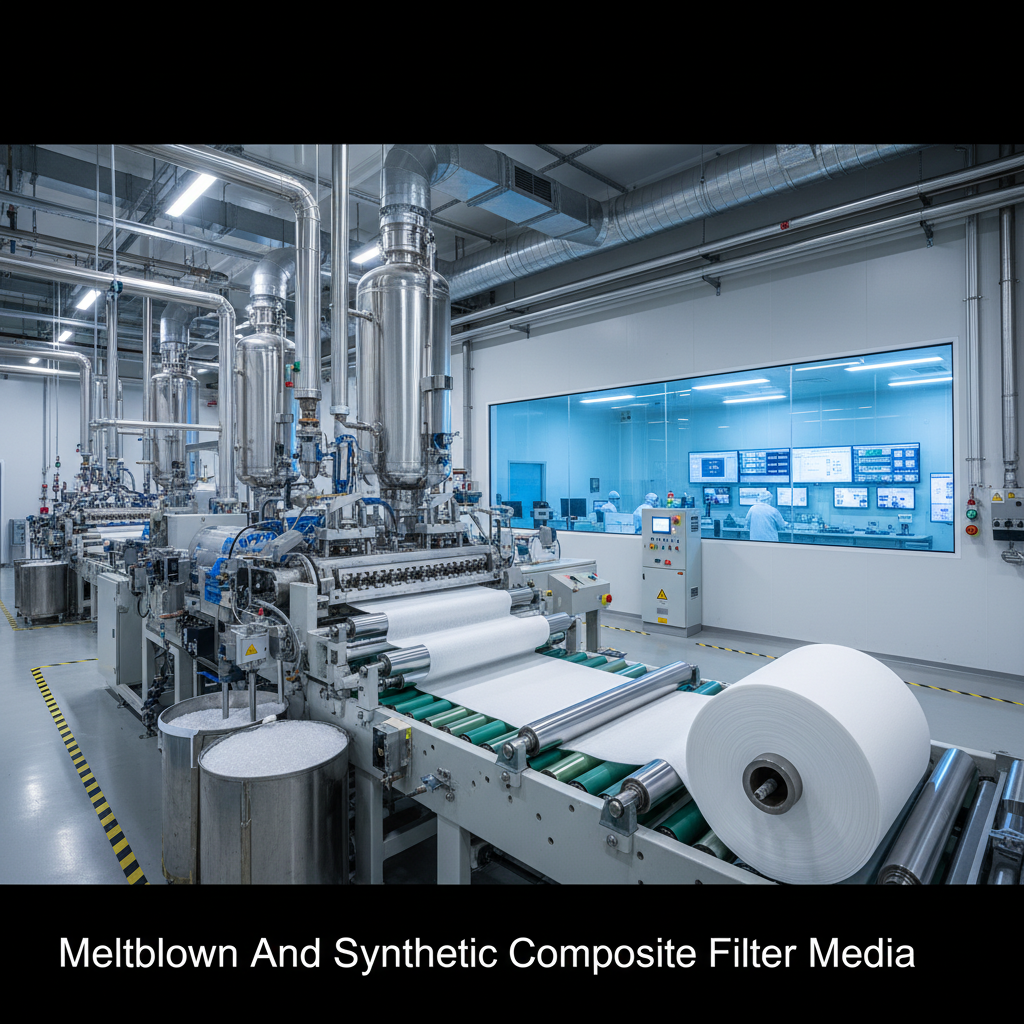
Selecting the right glass fiber filter media manufacturers is a critical decision for industrial facilities where air purity and particulate control directly impact operational safety and product quality. In the specialized field of synthetic materials manufacturing, glass fiber media stands out for its exceptional thermal stability and high-efficiency filtration capabilities, making it indispensable for harsh industrial environments.
Procurement officers and engineers often struggle to balance the trade-off between filtration efficiency and initial pressure drop. The challenge lies in finding a manufacturer that can provide consistent fiber density and structural integrity, ensuring that the filter media does not shed fibers or collapse under high-velocity airflow, which could lead to downstream contamination.
This guide provides a professional framework for evaluating manufacturers, analyzing the technical specifications of glass microfiber materials, and understanding the application-specific requirements for industrial air filtration to ensure long-term system reliability.

Core Technical Capabilities of Fiber Media Production

Professional glass fiber filter media manufacturers employ advanced non-woven fabrication techniques to create a complex matrix of glass microfibers. The primary goal is to achieve a controlled pore size distribution that allows for the capture of sub-micron particles while maintaining a manageable air resistance. This involves precise control over fiber diameter and the bonding agents used to stabilize the web.
Hebei Fangyu Filter Material Technology Co.,Ltd utilizes these capabilities to produce a wide range of synthetic and fiberglass media, including glass microfiber filter paper and composite fiberglass options. By integrating ISO9001 quality standards, the manufacturing process ensures that the media maintains structural stability across various temperature and humidity ranges.
Material Specifications and Performance Metrics
When evaluating media, the focus must remain on the interaction between fiber density and airflow. High-quality glass fiber media is characterized by its ability to provide a high surface area for particle interception. Key metrics include the Initial Resistance (Pa), which indicates the energy required to push air through the clean medium, and the Final Resistance, which determines the replacement cycle.
For instance, synthetic fiber layers with anti-fracture properties are often used to enhance tensile strength. In high-temperature environments, the use of solid glues and non-volatile solvents is essential to prevent the media from degrading or releasing harmful VOCs, ensuring that the filtration efficiency remains constant even under thermal stress.
Industrial Application Analysis for Glass Fiber
Glass fiber media is widely deployed in environments where standard cellulose or synthetic papers fail. A primary application is found in automotive spray painting and baking workshops. In these settings, the ceiling surfaces require media that can effectively stop paint overspray and dust particles from contaminating the fresh coat of paint on the vehicle.
Beyond automotive use, these materials are critical for HEPA filter media and industrial pocket filters. The high thermal resistance (often up to 120°C) allows glass fiber to be used in hot gas filtration and chemical processing plants where synthetic polymers would melt or warp, providing a reliable barrier against hazardous particulates.
Relative Efficiency vs. Pressure Drop Analysis
The relationship between filtration efficiency and air resistance is the most critical technical trade-off in filter design. As the efficiency percentage increases (e.g., moving from G4 to F5 grades), the density of the fiber matrix typically increases, leading to a higher initial pressure drop. This conceptual framework helps engineers determine the optimal grade based on the available fan capacity.
The chart illustrates a normalized relative index where higher values indicate greater performance in that specific dimension. This illustrative data shows that while F5 grade media provides the highest efficiency, it requires more energy to maintain airflow compared to G2 or G3 grades.
Supplier Evaluation and Quality Standards
Selecting among glass fiber filter media manufacturers requires a rigorous audit of their quality management systems. Certification by bodies such as ISO9001, UL, and SGS serves as a baseline for trust, indicating that the manufacturer follows standardized processes for material sourcing and batch testing. This prevents the risk of "batch drift," where different rolls of the same product exhibit varying efficiencies.
A reliable supplier should be able to provide detailed technical data sheets (TDS) that include air velocity, initial resistance, and dust-holding capacity. The ability to customize the media, such as adding a polyester square mesh for airflow distribution or using specific bonding glues, distinguishes a specialized manufacturer from a general trader.
Common Risks in Filter Media Procurement
One of the most frequent mistakes in procurement is choosing media based solely on the efficiency percentage without considering the dust capacity. A medium with 98% efficiency but very low dust-holding capacity will reach its final resistance quickly, leading to frequent replacements and increased downtime.
Another risk is fiber shedding. Low-quality glass fiber media may release micro-glass shards into the airstream if the bonding process is insufficient. This is particularly dangerous in cleanroom or food-grade environments. Verifying the "anti-fracture" properties and the quality of the immersion glue used by the manufacturer is essential to mitigate this risk.
Decision Framework for Media Selection
To maximize the lifespan of a filtration system, the media must be matched to the specific pollutant type and environmental conditions. The following table provides a qualitative comparison of different media types used by specialized manufacturers to help buyers align their requirements with the correct material technology.
| Media Type | Efficiency Level | Primary Strength | Best Use Case |
|---|---|---|---|
| Standard Glass Fiber | Medium-High | Thermal Stability | Industrial Exhaust |
| Glass Microfiber | Very High | Sub-micron Capture | HEPA/Fine Dust |
| Composite Fiberglass | High | Structural Rigidity | Pocket Filters |
| Synthetic Blend | Medium | Moisture Resistance | Pre-filtration |
| Laminated Mesh | Medium | High Tensile Strength | Heavy Loading |
| Activated Carbon Comp. | Variable | Gas Phase Removal | Odor Control |
Ultimately, the decision should be based on the Total Cost of Ownership (TCO), which includes the initial purchase price, the energy cost associated with pressure drop, and the labor cost for replacement cycles.
Frequently Asked Questions
Verification should be done by requesting a test report based on international standards (such as EN779 or ISO 16890). Check for the efficiency percentage at specific particle sizes and ensure the test was conducted at the rated air velocity.
Glass microfiber has a significantly smaller fiber diameter, which increases the probability of particle capture via diffusion and interception, allowing for much higher efficiency (F5-F9) than standard glass fiber.
Yes, provided the manufacturer uses moisture-resistant bonding agents and glues. Glass itself is inorganic and does not absorb water, but the binder must be selected to prevent the media from sagging or molding.
Premature failure is usually caused by excessive air velocity leading to fiber breakage, chemical attack from incompatible solvents, or sudden pressure spikes that cause the media to rupture from its frame.
ISO9001 ensures that the manufacturer has a documented quality management system, which is critical for consistency in filter media where a small deviation in fiber density can significantly alter filtration performance.
Most glass fiber media are compatible with polyester or galvanized steel meshes. However, for high-temperature applications, the mesh material must match the thermal resistance of the glass fiber to avoid structural failure.
Conclusion
Achieving optimal filtration requires a precise alignment between the material's technical properties and the operational demands of the facility. By focusing on validated efficiency metrics, thermal stability, and the manufacturer's quality certifications, businesses can significantly reduce their operational risks and energy costs associated with air filtration.
For those evaluating specific media requirements or seeking technical guidance on fiberglass solutions, detailed product specifications and capabilities are available at www.filtersmaterials.com to assist in making an informed procurement decision.